| PROJECT | Auxin – Connecting Cancer Patients |
| STATUS | Done |
| ROLE | Service and Digital Product Designer |
| TASKS | Research, Concept, Prototyping, Usability Testing, UI Design, Documentation |
| PARTNERS | University Of Applied Sciences & Arts Lucerne, AYA Cancer Support, Krebsliga Ostschweiz & Beider Basel, Health Care Experts, Cancer Patients and Relatives |
Summary
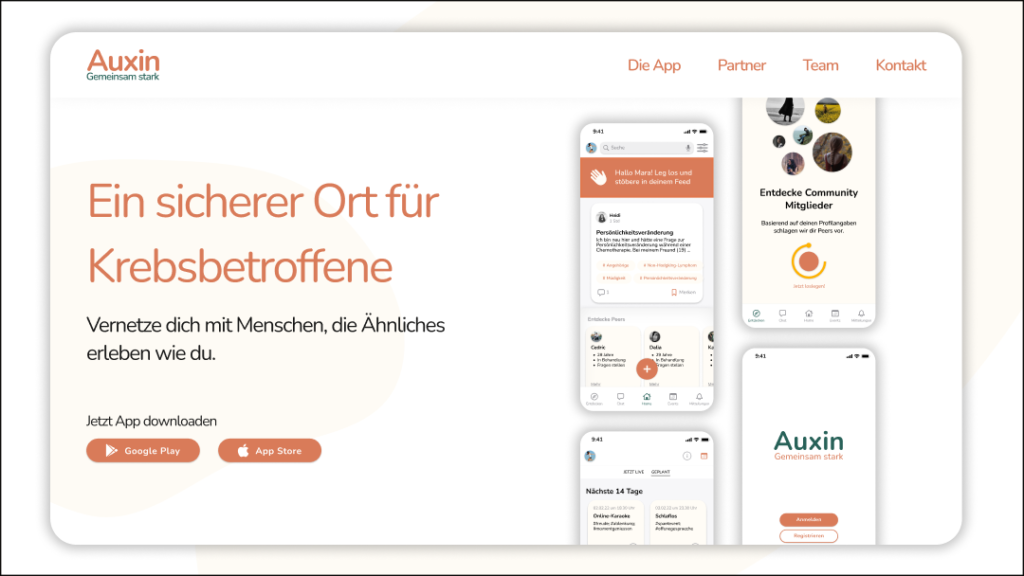
I developed Auxin, a digital service connecting cancer patients in their daily lives. At its core, Auxin is an app that provides easy networking opportunities and fosters interaction among users. The primary target demographic for the app is cancer patients aged between 20 and 50. Collaborating closely with cancer patients, their families, and relevant organizations, I employed various design methods to gain insights into pain points, identify opportunities, and iteratively refine the service prototype, focusing particularly on its main touchpoint: the app.
Goals
Create a low-threshold digital service that enables young cancer patients to cope with their everyday challenges
Challenges
- The majority of support services are tailored to patients aged 50 and above, leaving young patients feeling underserved.
- Young patients struggle to identify with existing support services designed for older demographics.
- When attending peer sessions, young patients often find themselves as the youngest individuals in the group, which can lead to feelings of isolation.
- Existing digital support platforms, including communities, forums, and social media groups in the DACH region, fail to meet the expectations of young cancer patients.
- Digital platforms lack engagement and fail to sustain continuous participation from young cancer patients.
- Cancer patients and their families are facing challenging circumstances
- The global COVID-19 pandemic has made cancer patients particularly susceptible to illness. Special care is required when interacting with them.
Approach
The approach to my Master’s Thesis integrated theoretical research with practical application. Through extensive desk research, I delved into fundamental design and interaction theories, while also studying concepts such as self-determination theory and behavioral economics. Additionally, I conducted interviews to identify pain points and uncover opportunities within the chosen field.
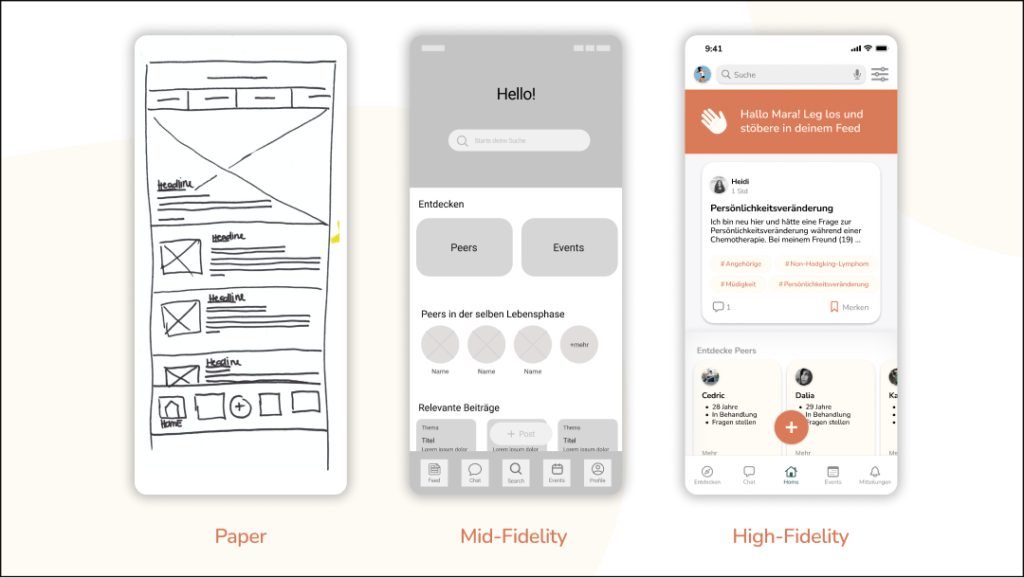
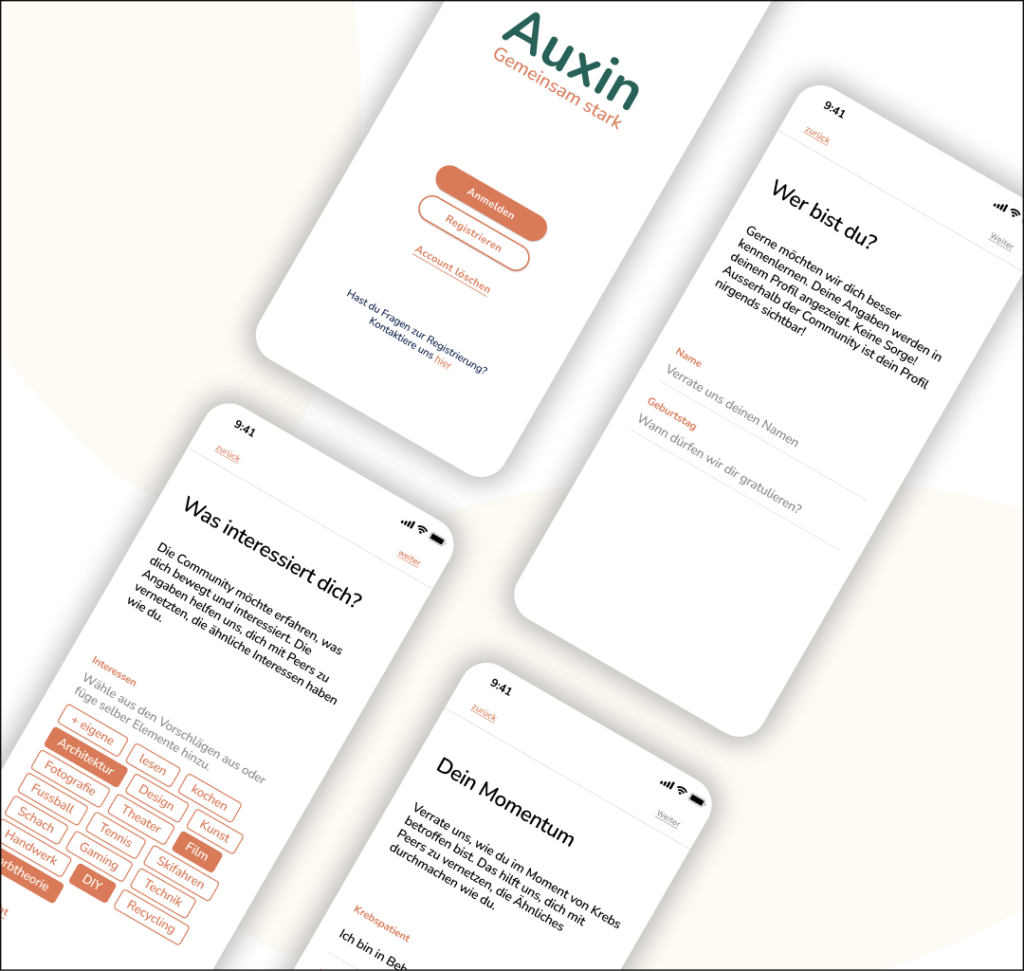
The insights gleaned from my thesis formed the foundation for the practical phase of my work. I translated these findings into actionable concepts, which I initially visualized using low-fidelity wireframes. These concepts were then tested with real users, allowing for iterative refinement. Ultimately, I developed a final, clickable high-fidelity prototype.
The culmination of this process was showcased in an exhibition at the University of Applied Sciences and Arts, where the project garnered significant positive attention.
Results
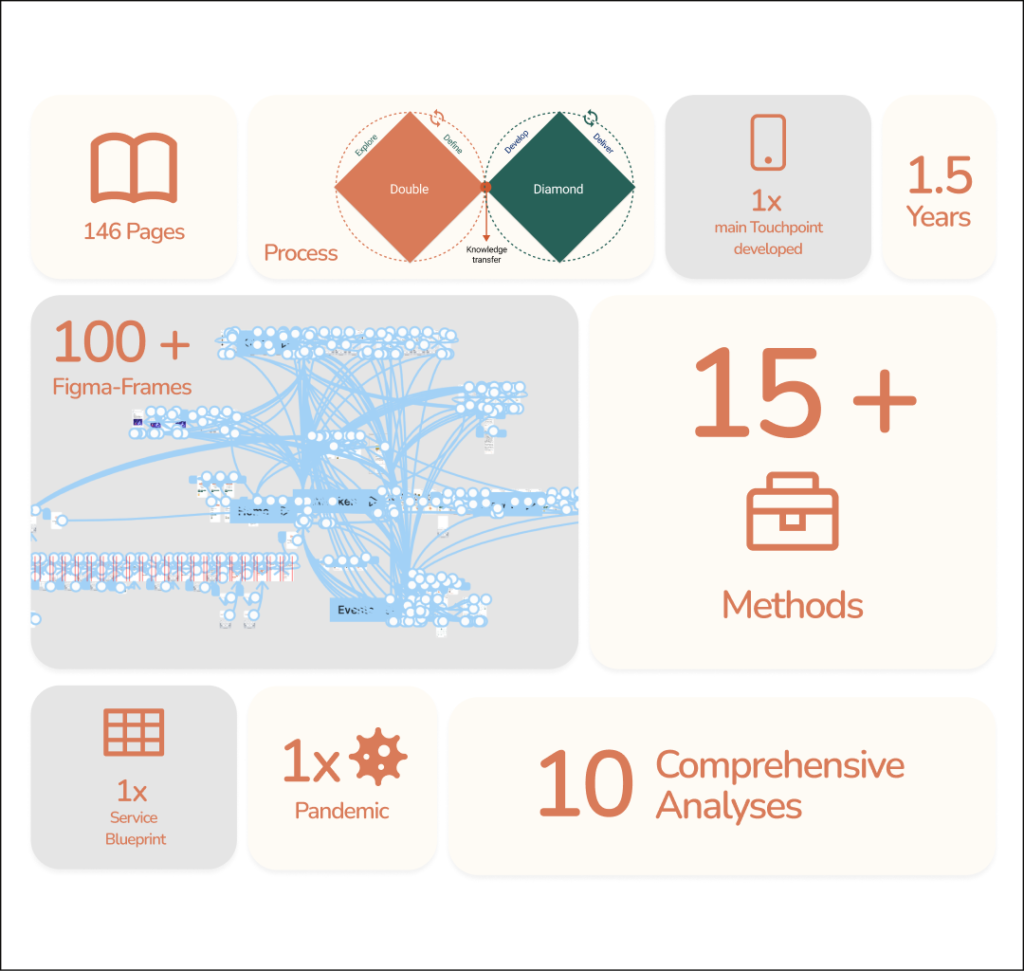
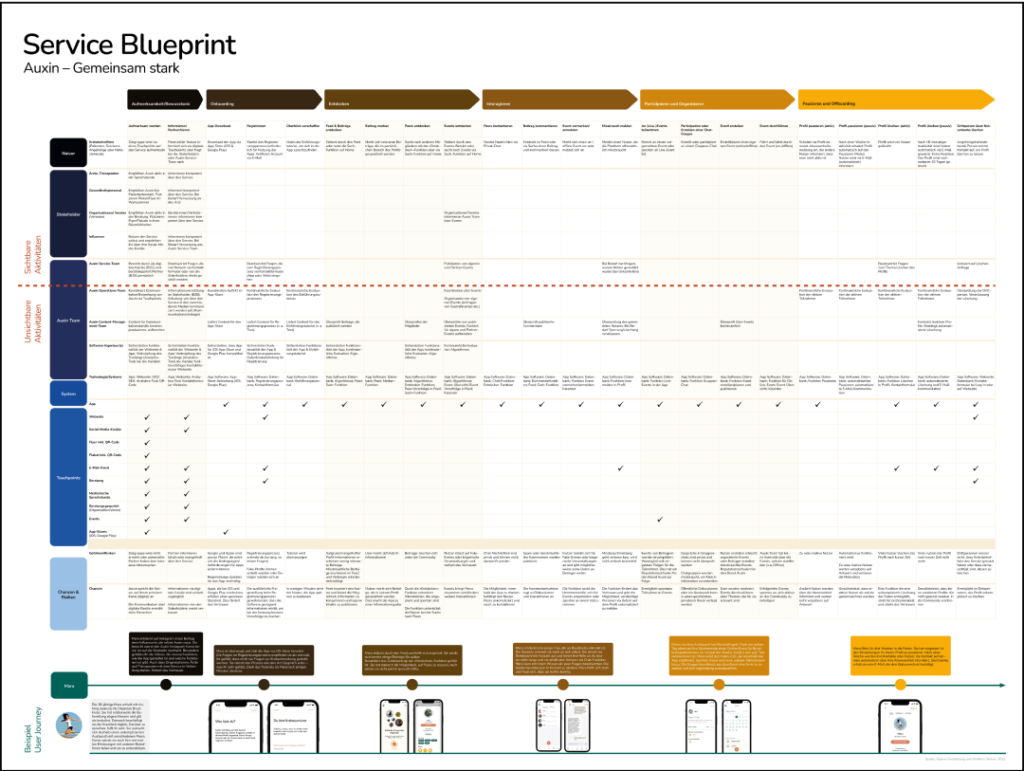
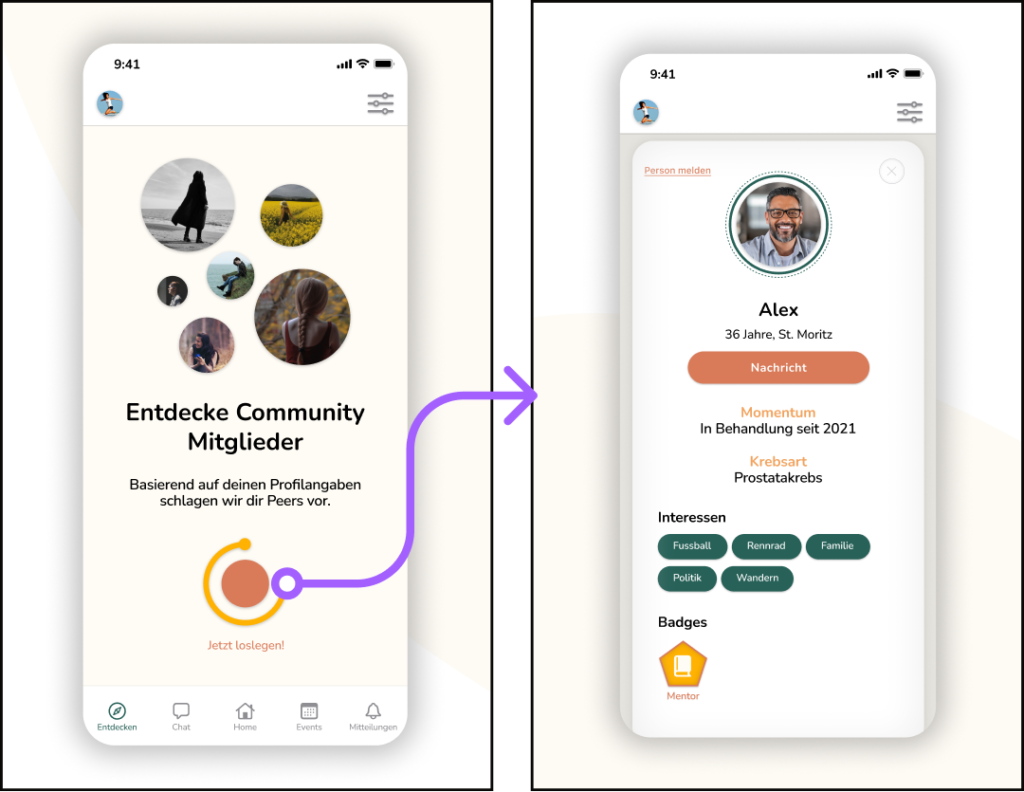
The project, which was showcased in an exhibition at the University of Applied Sciences and Arts, received widespread acclaim for its innovative approach to addressing the needs of cancer patients. Attendees were particularly impressed by the user-centered design process, which seamlessly integrated theoretical research with practical application. The final clickable high-fidelity prototype, developed iteratively based on user feedback, was praised for its intuitive interface and effectiveness in facilitating communication among users. Additionally, the inclusion of a Service Blueprint provided valuable insights into the service’s design and potential areas for improvement, further enhancing the project’s impact and recognition.